Eco-Friendly Travel Checklist: Zero-Waste Packing Made Easy
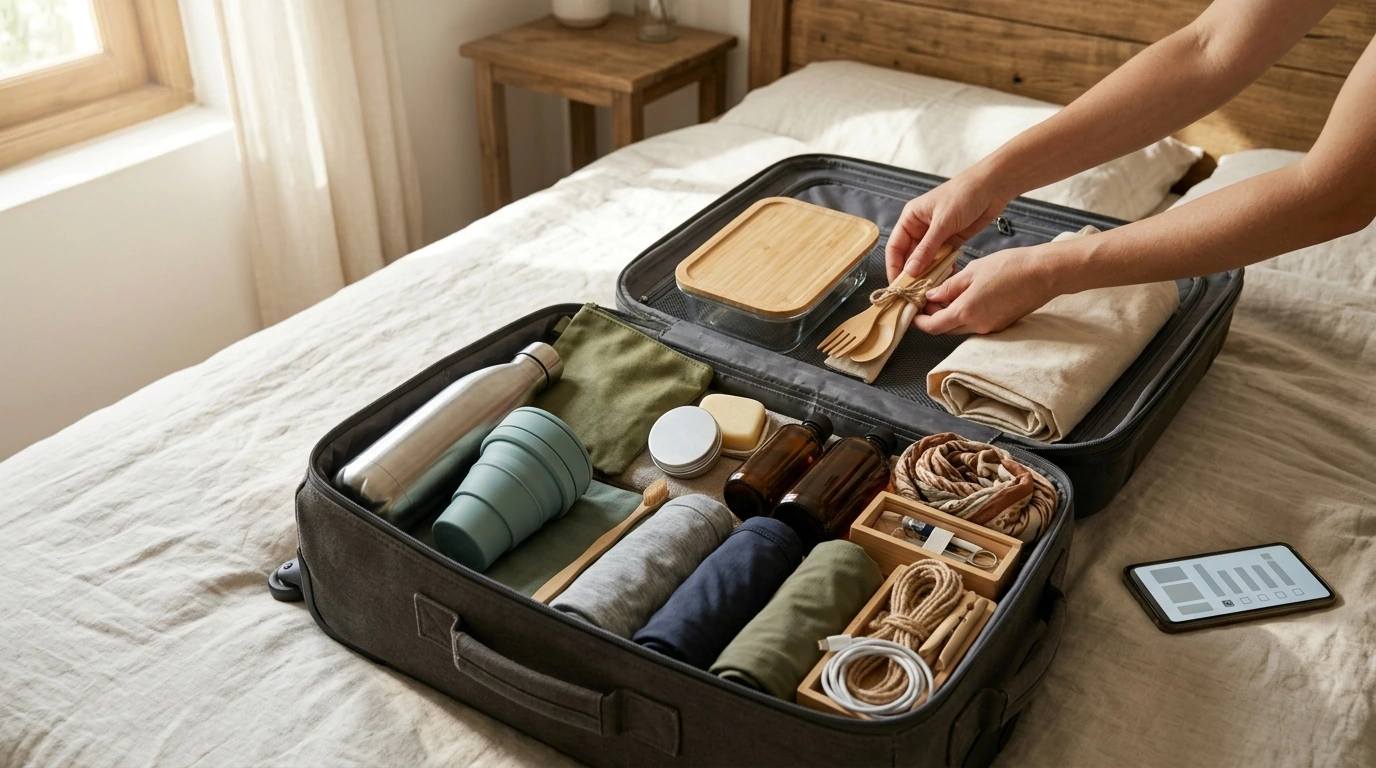
Eco-Friendly Traveler Checklist: Pack Lighter, Waste Less, Travel Better
Sustainable travel doesn’t require perfect choices—just smarter defaults that reduce waste, save money, and keep trips simple. A reusable, refillable, and repair-ready packing approach cuts single-use plastics, avoids overbuying at your destination, and keeps essentials organized from airport security to day trips.
What makes a trip “eco-friendly” in practice
Eco-friendly travel is less about one big gesture and more about repeatable habits that prevent waste before it starts. The easiest wins happen when the items you carry naturally replace common disposables—without adding hassle.
- Prioritize reusables that replace disposables: a water bottle, cup, cutlery, tote, and a food container cover most on-the-go waste.
- Pack multi-use items to reduce total volume: a solid cleanser that works for body and hair, a scarf that doubles as a layer or pillow, and a universal sink stopper for hand-washing.
- Choose low-waste toiletries: refillables, bar formats, concentrates, and travel-size filled at home instead of buying minis.
- Plan for responsible consumption: look up refill stations, shop local markets, and eat in sometimes to reduce packaging.
- Prevent “panic purchases”: keep a short, repeatable checklist so you don’t buy last-minute duplicates that end up tossed or forgotten.
High-impact swaps for low-waste travel
| Common travel item | Lower-waste option | Why it helps | Notes |
|---|---|---|---|
| Plastic water bottles | Reusable bottle + refill plan | Cuts single-use plastic and cost | Check if destination has safe tap water or use filtration |
| Travel-size toiletry minis | Refillable bottles or solid bars | Less packaging and fewer repeat purchases | Keep containers labeled for quick security checks |
| Disposable cutlery | Reusable spork/utensil set | Avoids landfill items from takeout | Pack in an easy-to-wipe pouch |
| Plastic shopping bags | Foldable tote | Reduces bag waste and adds capacity | Useful for laundry or groceries |
| Paper napkins | Small cloth or bandana | Reusable for meals and spills | Can double as a head covering or sweat cloth |
The core zero-waste packing list (carry-on friendly)
A low-waste kit works best when it’s compact, familiar, and easy to repack. Think in “systems” (hydration, food, hygiene, laundry, repairs) instead of single-purpose gadgets. If you fly, keep liquid rules in mind—especially for carry-ons (see the U.S. TSA liquids rule and general IATA cabin baggage guidance).
Hydration & food
- Reusable water bottle
- Collapsible cup (great for coffee/tea and hotel water)
- Reusable utensils
- Lightweight food container for leftovers or snacks
- Reusable snack bag
Toiletries (low-waste, security-friendly)
- Solid soap or shampoo bar (often replaces multiple bottles)
- Refillable liquids under 3.4 oz where required
- Bamboo toothbrush
- Refillable deodorant or another low-waste option
- Menstrual cup or period underwear (if applicable)
Clothing strategy (pack less, wear more)
- Capsule wardrobe with mix-and-match layers
- Quick-dry fabrics that can be sink-washed and re-worn
- One “nice” outfit to avoid an emergency purchase for a dinner, meeting, or event
Laundry & repairs (the anti-panic purchase kit)
- Travel clothesline or clips
- Small stain remover bar
- Mini sewing kit and a few safety pins
- Compact duct-tape wrap for quick fixes (luggage tears, shoe issues, gear patches)
Tech (minimal and rechargeable)
- Rechargeable power bank
- Multi-USB cable (fewer cords, less clutter)
- Earphones
- Download maps and tickets to reduce printing
Waste-prevention extras
- Small zip pouch for trash until proper disposal
- Reusable produce bag
- Travel-sized handkerchief
Green travel tips that don’t add friction
The easiest sustainable habits feel like “set-and-forget.” Once they’re part of your routine, they save time and reduce clutter on every trip.
- Refill first, buy later: top up toiletries at home and bring one spare container so you don’t end up buying packaged extras at the destination.
- Skip daily housekeeping when possible: reusing towels reduces laundry loads, energy, and chemical use.
- Use “one in, one out” on souvenirs: choose consumables, secondhand finds, or locally made goods with minimal packaging.
- Carry a tiny takeout kit: one container plus utensils prevents plastic forks, cling film, and foam boxes when plans change.
- Choose lower-impact transport where feasible: direct routes reduce takeoffs/landings, and public transit or walking cuts emissions while adding local texture (the UN Environment Programme highlights how practical choices support more sustainable tourism).
Trip-type add-ons: weekend, work, family, and outdoor
Weekend city break
Keep it simple: one versatile jacket, a compact tote, and a small container for leftovers can reduce food waste and prevent extra bag purchases.
Work travel
Modern Etiquette Micro-Course | Printable Digital Etiquette Guide
Family travel
Beach/outdoor
Must-Know Pet First-Aid Cheat Sheet | Emergency Printable Guide for Pet Owners
Cold climates
A printable/digital checklist makes sustainable habits stick
Digital download: Eco-Friendly Traveler Checklist
For a ready-to-use list you can reuse trip after trip, grab the Eco-Friendly Traveler Checklist digital download. It’s designed for carry-on travelers, weekend trips, and longer stays where laundry and rewearing reduce overall volume.
FAQ
What are the easiest eco-friendly swaps to start with for travel?
Start with reusables that replace daily disposables: a water bottle, foldable tote, compact utensil set, and refillable toiletries. These four swaps eliminate a surprising amount of packaging and are easy to remember because you’ll use them constantly.
How can packing light be more sustainable?
Fewer items means less overconsumption, fewer “panic purchases” on the road, and less temptation to buy duplicates in travel sizes. A small capsule wardrobe with versatile layers and quick-dry fabrics makes rewearing and sink laundry simple.
Are solid toiletries better for low-waste travel?
Often, yes—solid bars typically use less packaging, last longer, and reduce liquid restrictions for carry-ons. Let bars dry before packing and store them in a ventilated case to prevent mess and extend lifespan.











Leave a comment