1-Week or 1-Month Healthy Meal Plan + Recipes

Healthy Meal Plan & Recipe Collection: One Week or One Month of Balanced Breakfasts, Lunches, Dinners, and Snacks
A practical meal plan makes healthy eating simpler: fewer last-minute decisions, more consistent nutrition, and less food waste. A “good” plan also leaves room for real life—late meetings, low-energy evenings, and days when leftovers save the day. Below is a clear framework for building balanced meals, choosing between a one-week or one-month schedule, shopping efficiently, and adjusting portions without turning meals into a math problem.
For a ready-to-follow structure with breakfasts, lunches, dinners, and snacks already mapped out, see the Healthy Meal Plan & Recipe Collection eBook (one-week or one-month options).
What “balanced” means for everyday meals
Balanced eating doesn’t require perfect macros or complicated rules. A dependable approach is to build most meals around vegetables, protein, a high-fiber carbohydrate, and a source of healthy fat. Over a week, variety matters—rotate produce colors, switch up proteins (beans, fish, poultry, tofu), and lean on whole grains rather than refined carbs.
It also helps to limit the usual “sneaky” issues: excess sodium, added sugar, and ultra-processed snack foods. Instead, keep minimally processed staples on hand and plan hydration and meal timing. Regular meals plus planned snacks can stabilize energy and reduce impulse choices.
Balanced Plate Guide (Quick Reference)
| Plate Part | What to Choose | Simple Examples |
|---|---|---|
| Vegetables & fruit (largest share) | Non-starchy veggies; fruit for sweetness | Salad + berries; roasted broccoli + apple |
| Protein | Lean meats, fish, eggs, legumes, tofu, Greek yogurt | Chicken + chickpeas; salmon; lentil bowl |
| High-fiber carbs | Whole grains, starchy veg, beans | Brown rice; oats; quinoa; sweet potato |
| Healthy fats | Olive oil, nuts, seeds, avocado | Olive-oil dressing; chia; walnuts; avocado slices |
For deeper guidance on proportions and food groups, trustworthy references include USDA MyPlate and the Harvard Healthy Eating Plate.
One-week vs one-month meal planning: which fits best
A one-week plan is quick to set up and great for busy calendars, travel weeks, or testing recipes without feeling locked in. A one-month plan offers more structure and fewer repeated decisions, which can be helpful for budget control and habit-building—especially if weeknights are hectic.
A useful middle ground is a hybrid: repeat a core set of breakfasts and snacks, then rotate lunches and dinners weekly. If motivation tends to dip, shorter planning cycles (7–10 days) often feel more achievable while still providing enough structure to stay consistent.
Choosing a Planning Horizon
| Option | Best For | How to Use It |
|---|---|---|
| One week | Trying new foods, flexible schedules | Pick 3–4 dinners, batch 1–2 lunch bases, restock midweek |
| One month | Consistency, predictable routines | Create rotating weekly themes (e.g., Mediterranean, plant-forward) |
| Hybrid | Variety without overwhelm | Keep breakfast/snacks consistent, rotate dinners weekly |
A realistic daily framework (breakfast, lunch, dinner, snacks)
Instead of chasing novelty at every meal, rely on a simple daily template. Breakfast works best when it includes protein plus fiber—think eggs with vegetables or yogurt with fruit and seeds. Lunch can be as easy as planned leftovers: build a bowl or salad with a protein and a whole grain to avoid the mid-afternoon crash.
Dinner is where vegetable volume really pays off. Sheet-pan and one-pot meals reduce cleanup and make it easier to keep cooking consistent. For snacks, plan one to two options that include protein or healthy fat (nuts, hummus, cottage cheese) rather than “naked carbs” that disappear fast and leave you hungry again.
If sweets are part of normal life, a practical dessert strategy is to keep a portioned option available—like a square of dark chocolate or fruit with yogurt—so dessert stays intentional instead of turning into all-evening grazing.
Smart grocery planning to make the plan stick
Grocery success comes from “mix-and-match” ingredients you can reuse across meals. Stock greens, frozen vegetables, berries, eggs, canned beans, whole grains, plus a few sauces and spices. Then batch-cook two anchors: one protein (chicken, tofu, beans) and one grain (rice, quinoa). With those ready, meals become assembly instead of a full cooking project.
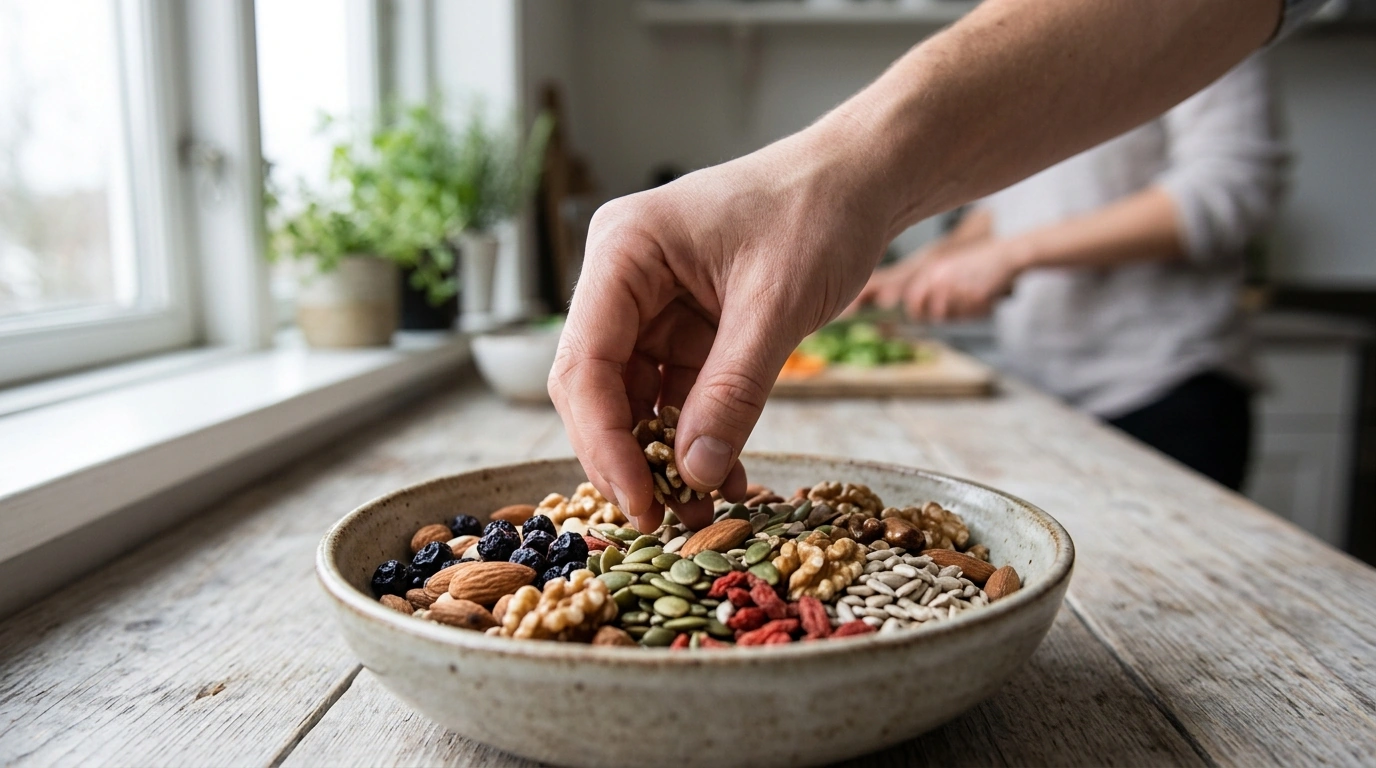
To reduce waste, use freezer-friendly items like frozen produce, shrimp, lean ground meat, and whole-grain bread. Create a snack drawer with portioned nuts, shelf-stable proteins (tuna packets, roasted chickpeas), and keep fruit visible on the counter so the healthiest option is also the easiest.
Finally, plan one to two “flex meals” each week—breakfast-for-dinner, pantry pasta, or a freezer stir-fry—for nights when schedules shift.
Portions and substitutions without calorie counting
General healthy-diet guidance is also summarized in the World Health Organization’s healthy diet factsheet.
The eBook option: ready-to-follow weekly or monthly recipes
If decision fatigue is the main barrier, a structured plan can help. The Healthy Meal Plan & Recipe Collection | One-Week or One-Month Healthy Meal Plan with Recipes for Breakfast, Lunch, Dinner & Snacks | Balanced Nutrition eBook is designed around complete days—breakfast, lunch, dinner, and snack ideas—so the week is already mapped out.
If building routines is the bigger challenge, pairing nutrition structure with a broader “systems” mindset can help. The Step-by-Step Career Development Guide – Professional Growth, Job Search, Networking & Resume Writing Ebook can complement a meal-planning habit by encouraging consistent weekly planning blocks and follow-through strategies.
FAQ
What is the healthiest meal plan?
The healthiest meal plan is the one that’s sustainable, varied, and balanced for your needs—built around vegetables and fruits, lean proteins, whole grains, and healthy fats while limiting ultra-processed foods and added sugars. Consistency over time matters more than perfection, and medical conditions or dietary restrictions should guide the details.











Leave a comment